

God’s Plan: The Aftermath and Mental Health of a Police Officer’s Critical Incident

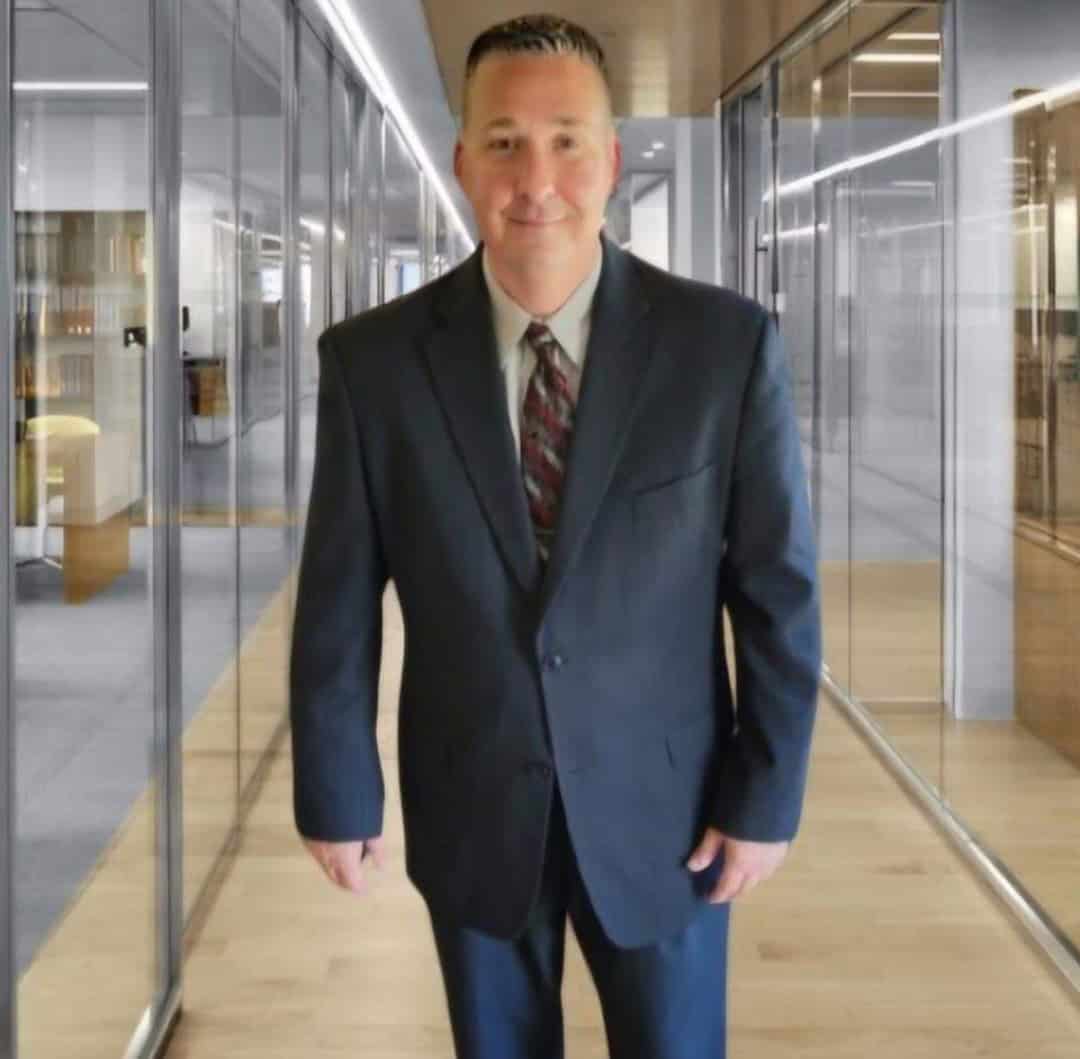
Captain Adam A. Meyers, CPS
My name is Adam, and I have been a Police Officer in Wisconsin for 23 years. I am also a Certified Peer Specialist in Wisconsin. I began my law enforcement career in 2001 after serving as an active duty United States Army Military Policeman. In April 2016, I was involved in a critical incident that changed my life forever when I used deadly force on someone who armed themselves with a hatchet inside a busy department store. This person died.
I suffered in silence for many years after my critical incident, and I am ashamed of the ways I poorly coped. I still feel shame for the ways I coped and treated people. I find it hard to believe that nobody realized or even had a gut feeling that I was not doing well. I could not have been that good at hiding my poor coping strategies, or was I? I have always wondered if people were slowly watching me self-destruct because they did not know what to say to me, how to help me, or they simply did not want to get involved.
Telling My Story: My Coping Mechanisms After Experiencing Trauma
It has taken me many years to get back on track. There are many different coping strategies people may use after experiencing trauma. They may be good and healthy, or they may be bad and unhealthy. My coping strategies were bad, unhealthy, self-destructive, and dangerous. I used alcohol, marijuana, casual sex, and self-harm as some of my poor coping strategies for years after my critical incident.
My poor coping strategies easily put my relationships, job, and health at risk, but I did not care. I wanted to escape from what I was feeling. I wanted to numb my emotions, my thoughts, my body, and any memory of taking someone’s life. I wanted to feel better, even if only momentarily. I was selfish, reckless, and I did not care how my self-destructive and dangerous behavior may have affected my family, friends, children, co-workers, and the public.
Many times after my critical incident, I did not want to go to work. This was not because I had other plans or that I was hungover from consuming too much alcohol, another one of my poor coping strategies, but because I just wanted to stay at home and isolate myself from the world. I wanted to lock all the doors of my home, close all the curtains, and shut everyone out of my life–which I did many times for many years. Sure, I called in sick from time to time, but on one occasion, I intentionally injured myself so that I didn’t have to work. I used an old 12-inch adjustable steel wrench to cause superficial injuries to my left knee. I struck my knee a dozen or more times, enough to cause redness, abrasions, and bruising, and limped into the local emergency room. I explained to the doctor and nurses that I had tripped and fallen down walking out of the back door of my house, and struck my knee on the steel covering of an underground septic tank.
My story was believable enough. I received X-rays of my knee, a prescription for pain medication, and crutches. I was discharged from the emergency room with a doctor’s letter releasing me from work for about one week. This occurred during a busy holiday work week. Although I was not able to truly celebrate the holiday, this deception got me out of work, and I was able to enjoy the time alone at home.
Making Myself Sick Intentionally
Another way I was able to get out of working was to make myself sick intentionally. While taking a shower before my shift, I was thinking about the many ways I could get out of work. While I was putting on my ballistic vest, uniform, boots, and duty belt, I thought to myself, I’m going to get out of work by binge eating and making myself vomit. I constructed a plan to visit the local Burger King drive-thru while traveling to work. I ordered a bunch of breakfast food and made sure I washed it down with a large soda and a large orange juice. I needed to make sure I added beverages to my breakfast buffet to ensure it would all come back up easier.
I continued to travel to work and passed the local McDonald’s. Thinking, “Two is better than one,” I quickly binged what I purchased from McDonald’s and proceeded to work.
I arrived at work, and upon exiting my vehicle, I masterfully played the role of the “sick employee.” I walked into the police department and made myself vomit in the bathroom. I made sure the bathroom door remained open so that anyone walking by could see or hear me. I made sure that not all my vomit made it into the toilet and landed on the floor for added effect. I was immediately sent home.
Abusing Alcohol
Another of my many poor coping strategies was abusing alcohol. Prior to the incident, I collected wine and enjoyed a glass every now and then. However, after, I began abusing liquor, mainly whiskey and the cheapest vodka I could get my hands on. I would consume whiskey and vodka straight from their bottles, on the rocks, or I would create my own cocktails by combining over-the-counter liquid sleeping or liquid allergy medicines. There were times I would mix in whatever leftover prescription medicines I had in the medicine cabinet, and it didn’t matter if they were prescribed to me or someone else.
For example, I remember one instance when my oldest daughter had leftover prescribed liquid cough medicine containing codeine. I combined whatever was remaining in the bottle with a glass of wine. I was on a prescribed anti-depressant called Venlafaxine while I was abusing alcohol. The label on this medication specifically stated, “DO NOT DRINK ALCOHOLIC BEVERAGES WHILE TAKING THIS MEDICATION.” A warning label did not deter me from abusing alcohol. I very well could have blacked out and never woken up from consuming these dangerous cocktails, but at the time, I did not care. Abusing alcohol may have been a quick fix, but it caused me even more stress, anxiety, and depression.
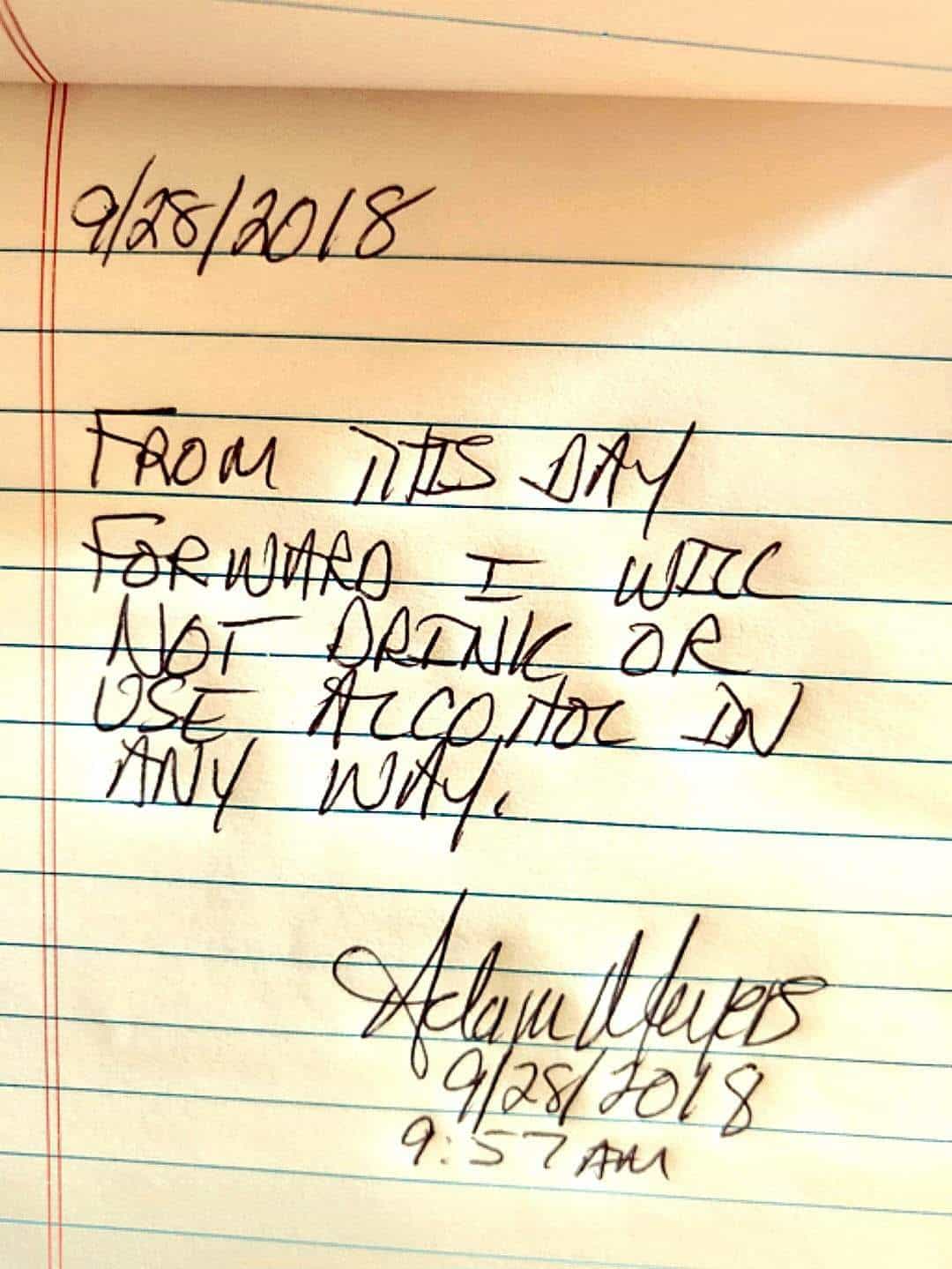
In September 2018, I drafted a written contract with myself not to consume alcohol. I don’t remember writing the contract, but there was something inside of me that recognized how self-destructive alcohol was. This contract quickly became null and void because it took me another three years to reduce my alcohol consumption.
Another way I dangerously coped was by drinking and driving. Prior to attending any type of social event, even as simple as going to the grocery store, I would consume alcohol. I would travel to a nearby gas station and purchase many small bottles of liquor containing about 1.5 ounces of whiskey, vodka, or whatever I could afford at the time. I would immediately consume the alcohol in my vehicle prior to traveling to my destination. While driving, I tossed the empty bottles in the back of my vehicle or out the window. I would rationalize that it would take about 30 minutes for me to feel the effects of the alcohol, and by the time I was impaired, I would have arrived at my destination. I was very fortunate that I was not arrested for drinking and driving or even worse, killing someone.
Another example of risky and reckless behavior that I am still ashamed of today involved alcohol, operating while impaired, and my youngest daughter. I was consuming alcohol late morning into the early afternoon and had to pick up my youngest daughter at her mother’s (my ex-wife’s) house and take her to gymnastics. As we drove to gymnastics, I took the wrong turn and drove 21 miles out of the way. I drove for 61 miles impaired by alcohol. For 46 miles, I had my youngest daughter with me.
Casual Sex
I used casual sex as a coping strategy and to distract myself from my emotional discomfort and pain. I would meet women, and sometimes, within 30 minutes, we would have sex. This caused me more stress and anxiety than anything else.
Sure, I felt great during sex, but it caused me more harm than good. I was constantly worried about pregnancy and contracting a Sexually Transmitted Disease. Although this type of sexual behavior was risky, self-destructive, and caused me stress and anxiety, it was not enough to convince me to stop. I wanted an instant feel-good escape from my life, and casual sex provided that for me.
Contemplating Suicide
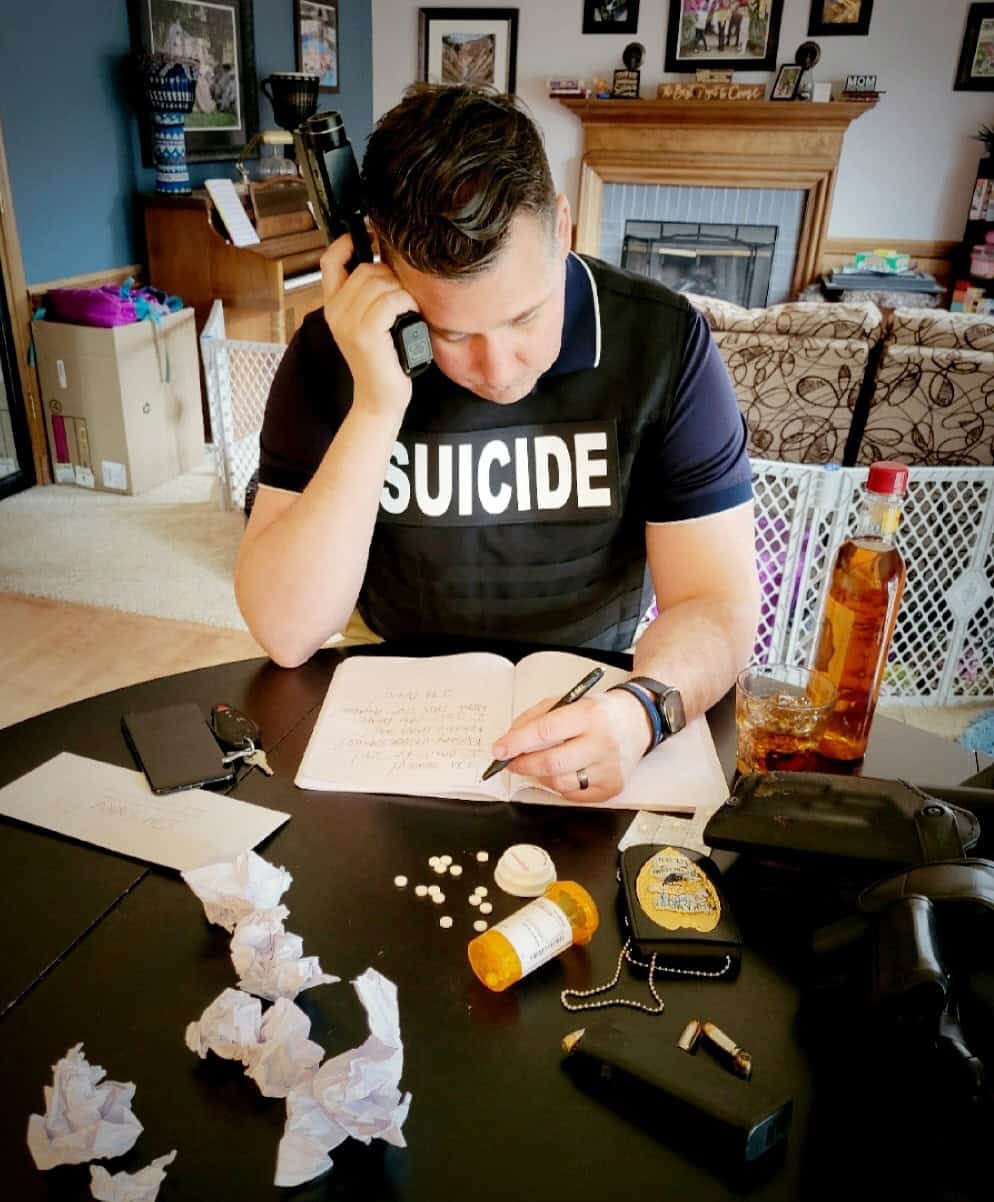
Another dangerous and unimaginable way I coped was by putting my duty weapon to my head. During my critical incident, it was a Glock 22 Gen 4 – 40 Caliber. I put this weapon to my head at least a dozen times. Sometimes I even placed the barrel in my mouth. I would always remove the magazine, but for those of you who are not familiar with a Glock, if you don’t rack the slide and remove the round from the chamber (barrel), it will still discharge a round. I very easily could have accidentally killed myself.
My rationalization was that I simply wanted to hear and feel the metallic click of the trigger being pulled while the barrel of the gun was resting against my right temple. I did this while I was under the influence of alcohol. I still do not truly understand why I did this, and sometimes wonder how many times it happened while I was excessively consuming alcohol. I am very fortunate to be alive.
My Diagnosis
In December 2021, I experienced a panic attack during an active shooter training, which led to a psychological assessment in January 2022. The evaluation lasted seven hours and resulted in a nine-page mental health diagnosis. I was thinking about not being honest during the evaluation. I thought I could beat the evaluation. I chose to be honest with the evaluation and myself; that was the only way I would receive the type of help I needed.
I was diagnosed with Major Depressive Disorder and PTSD with Acute Stress – with Dissociative Features by the police department’s psychologist and deemed Unfit for Duty. This meant I was not able to return to work and needed to undergo intense Psychotherapy, Eye Movement Desensitization and Reprocessing (EMDR), Biofeedback, and Dialectical Behavior Therapy (DBT).
I requested a 90-day leave of absence to work on my mental health in the hope of returning to duty. I attended therapy two to three days a week for 90 days. I was finally undergoing the right kind of mental health treatment that helped me heal and understand why I adapted to poor coping strategies to self-medicate. My only wish was that I had begun this therapy five years earlier, but it was better late than never.
In April 2022, during my leave of absence, I was placed on a safety plan because of my suicidal ideations. The psychological exam discovered an elevated risk of harm to myself. I agreed not to engage in self-harm, destructive or life-threatening behavior, or any other high-risk behavior to myself or others. I don’t remember ever wanting to die by suicide, but my behaviors were very evident that I was heading in that direction. There were many nights I would pray to God that he would not let me wake up in the morning.

In May 2022, I met with my police chief and was told my leave of absence was not going to be extended. I was given the option to resign or I would be terminated. I chose not to resign and was terminated.
What next? I had been diagnosed with a mental illness, on a safety plan, and terminated from a job I’ve wanted since I was a little boy. I had been employed with the police department for 14 years. What if I had gone home and died by suicide? It was almost as if the police department washed its hands of me. My co-workers ghosted me. The same people who not only knew me professionally but also personally. They knew my family, my daughters, helped me move, and even came to me with their own personal and professional mental health challenges. I would have died for them. I felt hopeless, helpless, and abandoned. I was devastated.
I continued weekly therapy that includes in-person Psychotherapy and Eye Movement Desensitization and Reprocessing (EMDR). I am also prescribed Lexapro (20mg) and Propranolol (as needed), which are medications that help me with my depression and generalized anxiety.
I have faced many personal and professional mental health challenges after my critical incident, and it has taken me many years to get back on track. I am currently a police captain in Wisconsin. I am where I am today because I finally put myself first and moved past my poor coping strategies. I would not have been successful with healing my mental health without the unwavering support of my family, friends, colleagues, counselors, and even complete strangers. I am very grateful and will never be able to put into words how much their support means to me.
I also want to thank my Police Chief Shawn McGee for strongly supporting my mental health and the mental health of his officers. Chief McGee is helping to stop the stigma of mental health in the law enforcement profession. He doesn’t just talk the talk – he puts his words into action.
Law Enforcement and Mental Health
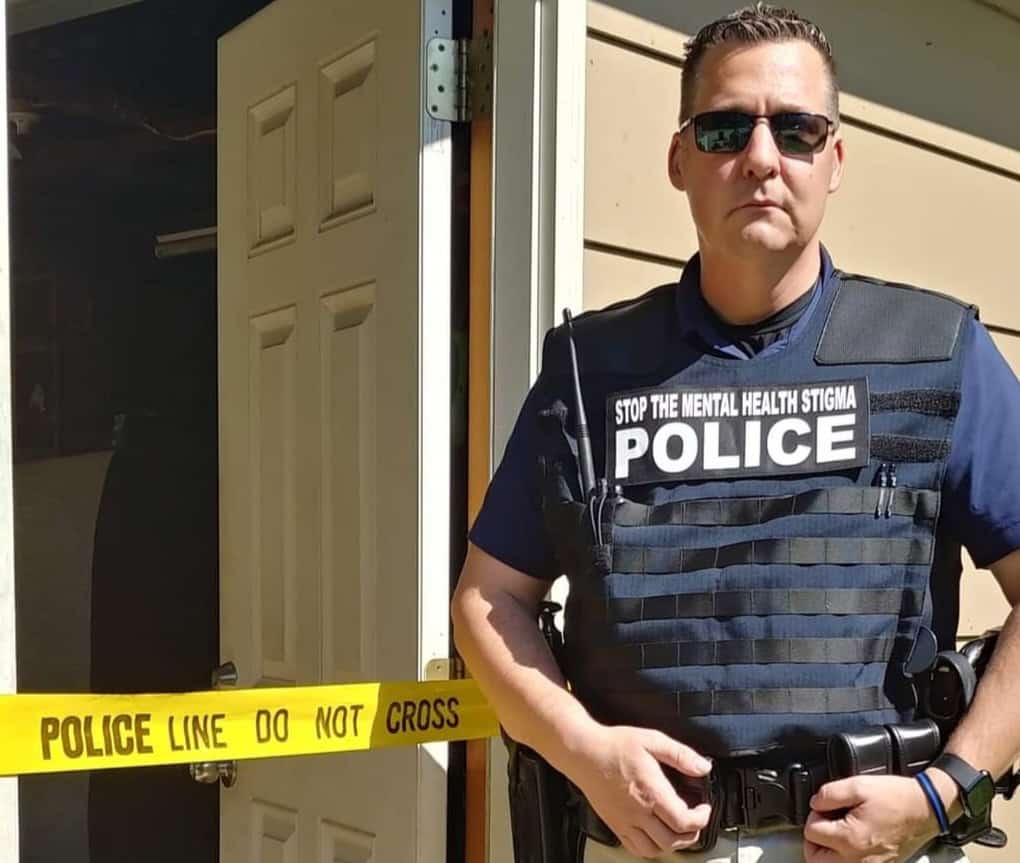
The law enforcement profession is a high-stress environment that has been associated with mental health issues. Law enforcement professionals who struggle with mental health issues often feel devalued and fearful because of the negative attitude society and others in their profession may have against them. As a result, law enforcement professionals struggling with mental health issues may not get the help they need for fear they’ll be discriminated against, or even worse, terminated.
Law enforcement professionals need to be able to trust the leaders and colleagues of their departments to recognize the obstacles and stigmas associated with mental health. They need to feel comfortable and confident that if they are involved in a critical incident and later struggle with mental health issues from the incident, help will be available without shame or judgment.
Law enforcement leaders must take a helpful approach when anyone in their command is struggling with mental health issues. Leaders should establish peer support groups and actively participate in them. Mental health is prominent everywhere, and it commands a new perspective. Without advocacy and awareness, we will continue to wait until the crisis stage to address mental health for law enforcement professionals, and by then, it may be too late. Leaders, “Are you a part of the problem or the solution?”
Please reach out to someone if you believe they are struggling with their mental health. I know it may feel awkward or uncomfortable, but most people will not admit they are struggling, and most people will not reach out for help. You could be a light during a very dark time in their life. Remember, it’s okay to talk about your mental health. You are not alone. Please don’t suffer in silence.
Why I’m Sharing My Story
I am sharing my story with you by the grace of God. I know the road I travel is paved by Him. There are seasons in life that feel impossible to understand when we are in the middle of them. The night of my critical incident, when I had to take a life, was one of those moments. It left me with a heaviness I could not shake, questioning why God would place me in such a situation. Yet in the midst of the pain, I began to see that even in tragedy, God was not absent. He was allowing me to face something that would break me, forcing me to confront my own humanity and the weight of the badge I wear.
The struggles that followed were some of the darkest valleys of my life. My mental health suffered deeply. I lost the job that had become my identity. Being terminated and abandoned felt like the final blow. Everything I had worked for and sacrificed was stripped away. I wondered if God had abandoned me. But what I realized was that sometimes God allows things to be removed from us, not to punish us, but to redirect us. He knew I needed to heal in ways I had ignored for far too long.
Stepping Back Into Law Enforcement
Through counseling, reflection, and faith, I began the long road of healing my mental health. What once felt like shame slowly transformed into growth. God showed me that my scars could be part of my testimony, that my brokenness could actually be a strength. He reminded me that my worth was not in a job title, but in Him. In the silence, He rebuilt me with more compassion, humility, and resilience than I ever had before.
As I prepared to step back into the uniform and serve again, I saw God’s hand in all of it. The critical incident, the struggles, the loss of my job, and the healing process were not wasted experiences. They were part of a greater plan to shape me into a stronger officer who serves not only with authority but with empathy and understanding. God put me through the fire so I could return refined – not the same man who went in, but someone equipped to protect, serve, and lead with a renewed spirit.
www.stopthethreatstopthestigma.org
Watch this space for more mental health stories. Do you have yours? Please share them with us.



Responses