

AI Displacement Myth Series: So, Is AI “Better Trained” Than Humans?

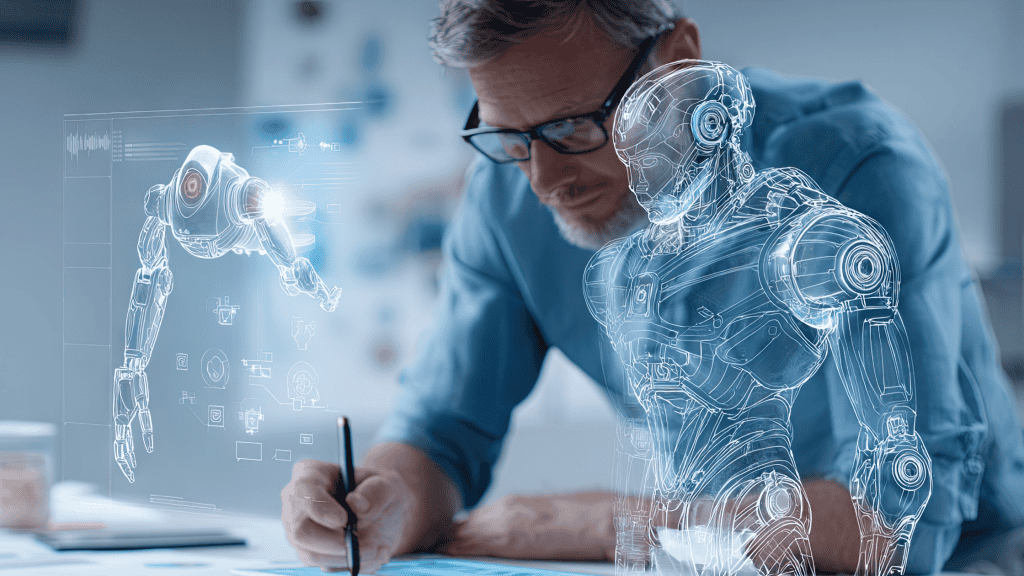
Imagine an AI reviewing millions of medical images in seconds. Does that make it smarter than a radiologist? On one level, yes. On another, absolutely not. The answer is nuanced: AI is better trained in some ways, but humans remain essential.
Yes, AI Trains on Scale Humans Never Could
AI is trained on massive datasets, including millions of images, billions of words, and countless transactions, far more than any one human could process in a lifetime. This scale allows AI to:
- Spot ultra-fine patterns that humans might miss.
- Recall and compare vast numbers of examples instantly.
- Operate without fatigue, bias, or forgetfulness.
For example, AI in healthcare has reviewed millions of mammograms, detecting subtle signs that could be missed by a human. In language or finance, AI processes billions of examples to identify patterns beyond human capacity.
No, AI Does Not Truly Understand
However, AI does not understand meaning, context, or consequence.
- A radiologist interprets what cancer means for a patient’s life, while AI only detects correlations.
- A financial analyst evaluates risk and ethics, while AI detects anomalies statistically.
- Teachers interpret intention and nuance, whereas AI can only process patterns in text.
Humans provide judgment, context, and empathy, which AI cannot replicate.
Evidence Shows Humans and AI Work Best Together
Research demonstrates the strengths and limits of AI compared to humans:
- Seeing eye-to-eye? A comparison of object recognition performance in humans and deep convolutional neural networks under image manipulation. Humans are more robust under distorted or unfamiliar images, while AI performs best on patterns it has already seen.
- Generalisation in humans and deep neural networks
AI can overfit to its training data, while humans generalize flexibly to new conditions. - Human and AI Perceptual Differences in Image Classification Errors
Humans and AI make different types of mistakes. Combining both reduces errors beyond what either achieves alone. - A comparison between humans and AI at recognizing objects in unusual poses.
Humans excel at recognizing novelty and unusual views, while AI struggles unless extensively retrained.
These studies show that AI is powerful at scale but brittle outside its training, while humans provide adaptability, meaning-making, and judgment. Together, humans and AI outperform either alone.
Why Humans Must Stay at the Center
AI provides speed, scale, and precision. Humans provide interpretation, judgment, and care. Keeping humans at the center allows AI to act as a super-smart assistant:
- AI spots patterns that might otherwise be missed.
- Humans decide, provide context, and take action.
This partnership is especially critical in healthcare, finance, and education, where decisions have real-world consequences.
The Takeaway
Is AI better trained than humans?
– Yes, AI sees more examples and detects patterns beyond human reach.
– No, AI cannot understand meaning, context, or ethics.
The solution is not choosing between AI and humans. It is combining the strengths of both.
AI does not out-train humans. It helps humans train better.
References
A comparison between humans and AI at recognizing objects in unusual poses
Human and AI Perceptual Differences in Image Classification Errors



Responses